

Special Sessions
The Scientific Committee of the 8th EMCEI invites the submission of research papers addressing cross-cutting themes in environmental sciences and engineering, with a primary focus on the Conference Tracks.
The international scientific community is also invited to propose new conference tracks (e.g., special sessions, satellite events, etc.) until 15 April 2026.
If you are interested in proposing a special session and/or a satellite event, please consult the examples from EMCEI-2024 and EMCEI-2025 and submit your proposal to emcei@performer-events.org.
Approved conference tracks will be listed on this page once confirmed. Participants will subsequently be able to select their preferred track during the abstract submission process through the PerformerSolutions Submission System.
If a special session or satellite event attracts 10 confirmed participants, one registration fee waiver will be granted to a convener. For each additional group of 10 confirmed participants, one additional registration fee waiver will be granted (i.e., one waiver per 10 confirmed participants).
The sessions that our Steering Committee has previously approved are listed below. The list will be updated each time a session and/or a satellite event is approved:
Special Sessions
Track 17. Special Session on Mining wastes: characterization, environmental impacts, risk assessment, sustainable management, valorization and site rehabilitation
About the session
Mining wastes represent one of the most significant environmental challenges associated with mining activities worldwide. The increasing volume of mining residues requires comprehensive characterization to better understand their physicochemical properties, environmental behavior, and long-term risks. Without appropriate management, mining wastes can adversely affect ecosystems, contaminate soil and water resources and pose serious threats to human health. Assessing ecological and health risks linked to mining waste has therefore become essential for supporting evidence-based decision-making and sustainable land-use planning. In parallel, the rehabilitation of abandoned mining sites is gaining strategic importance as countries seek to mitigate legacy pollution while restoring ecological functions. Beyond risk mitigation, mining wastes also offer promising opportunities for valorization. Their reuse in construction materials, geotechnical applications and other industrial sectors contributes to resource efficiency and supports the transition toward a circular economy.
This special session aims to bring together researchers, industry experts and policymakers to discuss recent advances, innovative methodologies and practical experiences related to mining wastes management, environmental protection and sustainable rehabilitation strategies.
Key topics of interest include, but are not limited to:
- Mining wastes characterization: mineralogical, geochemical and physical properties
- Environmental impacts of mining wastes on terrestrial and aquatic ecosystems
- Human health risk assessment
- Methods and tools for environmental risk evaluation
- Rehabilitation and ecological restoration of abandoned mining sites
- Innovative remediation technologies and techniques
- Recycling of industrial and mining wastes as alternative resources across multiple sectors
- Valorization of mining wastes in construction, civil engineering and other industrial applications
- Circular economy approaches and life cycle assessment for sustainable waste management
- Regulatory approaches and environmental management strategies
Conveners

Mounir Medhioub


Fernando Rocha
Invited Speakers

Rui Miguel Novais
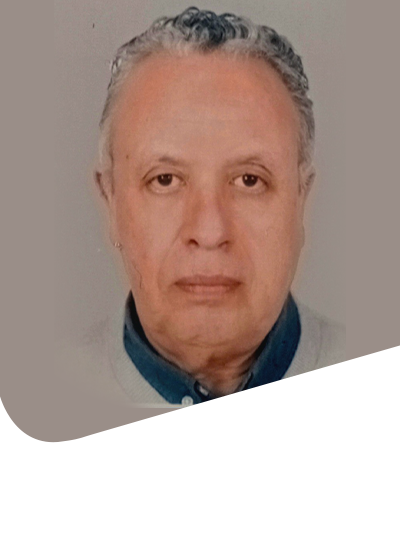
Nabil Allali
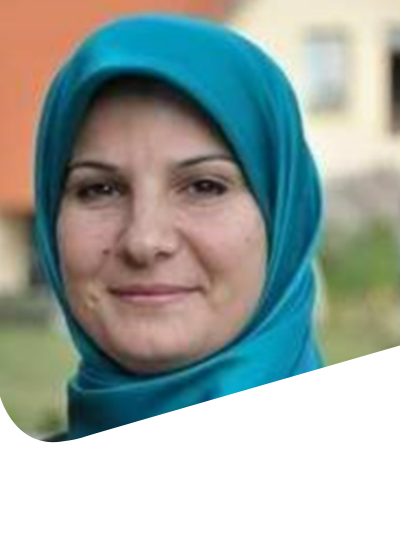
Asmae Khaldoun
Track 18. Special Session on Water, Soil, and Climate: An Euro-Mediterranean Vision for the Resilience of Arid and Semi-Arid Zones
About the session
Arid and semi-arid regions are marked by low rainfall, high climatic variability, and elevated temperatures—conditions that make natural resources extremely vulnerable. Water, already scarce, faces increasing pressure from population growth, the expansion of irrigated agriculture, and the impacts of climate change. Groundwater depletion, declining water quality due to salinization, and saltwater intrusion in coastal areas represent critical challenges. The lack of adequate storage, treatment, and management infrastructure further intensifies these pressures, limiting the long-term sustainability of domestic, agricultural, and industrial water supply systems.
Soil, a vital yet fragile resource, is also severely threatened. Wind and water erosion, crusting, salinization, and the loss of organic matter progressively diminish soil productivity. Traditional agricultural systems—often marked by overexploitation, overgrazing, and limited crop rotation—exacerbate land degradation, leading to a persistent decline in yields. These vulnerabilities are further amplified by climate change, which increases drought frequency and heightens rainfall irregularity.
The environment as a whole is under growing stress from both human activities and climatic constraints. Desertification is rapidly advancing in many regions, shrinking natural ecosystems and threatening biodiversity. Oases and wetlands—key ecological buffers in arid landscapes—are increasingly disrupted by water overuse, pollution, and urban expansion.
This session will address these interconnected challenges through three thematic axes:
1. Water Scarcity and Sustainable Water Management
- Innovative water-saving technologies and optimized irrigation systems in arid environments
- Groundwater protection, desalination strategies, and integrated water governance in the Euro-Mediterranean region
2. Soil Degradation and Strategies for Soil Conservation
- Combating salinization, erosion, and soil nutrient depletion under climate stress
- Sustainable land management: agro-ecological practices, crop rotation, and restoration of degraded soils
3. Environmental Vulnerability, Climate Change, and Ecosystem Resilience
- Desertification dynamics, biodiversity loss, and ecological fragmentation in fragile landscapes
- Adaptive strategies for preserving oases, wetlands, and key ecosystems in arid and semi-arid regions
Promoting sustainability in these regions requires a balanced approach that integrates human needs, safeguards fragile natural resources, and strengthens adaptation to climate change—ultimately enhancing the long-term resilience of arid and semi-arid territories within the Euro-Mediterranean region.
Session Objectives
- Analyze the key challenges affecting water availability, soil quality, and ecosystem health in arid and semi-arid regions of the Euro-Mediterranean area.
- Promote integrated and sustainable management practices for water resources, including groundwater protection, efficient irrigation, and climate-adaptive strategies.
- Identify and share effective soil conservation techniques to combat erosion, salinization, and nutrient depletion, enhancing long-term agricultural productivity.
- Assess environmental vulnerabilities, including desertification and biodiversity loss, and explore strategies to restore and maintain resilient ecosystems such as oases and wetlands.
- Facilitate knowledge exchange and collaborative solutions among researchers, policymakers, and practitioners to enhance resilience and sustainability in arid and semi-arid territories.
Conveners
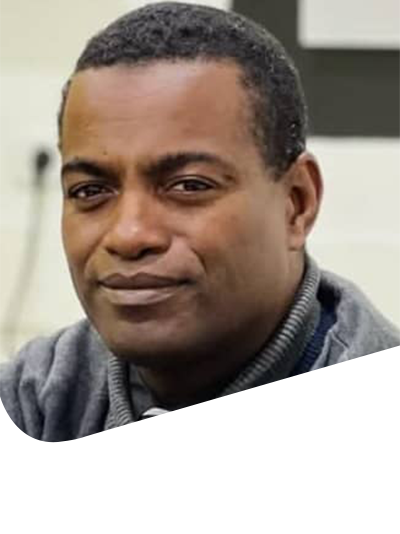
Sofiane Saggaï

Oumelkheir Bachi

Saber Kouadri
Track 19. Special Session on Plant Protection in Arid and Semi-Arid Regions
About the session
Arid and semi-arid regions are shaped by multiple interacting pressures, including extreme temperatures, chronic water scarcity, soil degradation and salinization. These conditions intensify the vulnerability of crops and rangelands to different types of pests. while also limiting the resilience of local agroecosystems. Climate change, land-use transformation, desertification processes, and unsustainable agricultural practices further exacerbate these challenges. Emerging and re-emerging pests often spread more rapidly under such stressors, putting significant pressure on food security and rural livelihoods in these fragile environments.
This session explores the major biotic stressors threatening crops and natural vegetation in dryland environments, highlighting the complex interactions between climatic extremes, ecological imbalance, and pest dynamics. A central theme is the need for integrated, landscape-level approaches capable of capturing the continuum between desert margins, cultivated areas, and oasis ecosystems. Understanding these connections is crucial, especially in the context of concurrent stress factors—such as drought combined with pest outbreaks, heatwaves followed by pathogen proliferation, or land degradation facilitating invasive species establishment.
The session aims to advance scientific knowledge and support evidence-based decision-making for agricultural authorities, extension services, and land-management institutions. It will emphasize the importance of innovative and sustainable protection strategies, including ecological intensification, biological control, resistant crop varieties, and adaptive management frameworks tailored to dryland conditions. Equally important is the promotion of restoration-orientated practices through Nature-Based Solutions (NBS) and Integrated Pest Management (IPM) to strengthen resilience and reduce dependency on chemical inputs.
By gathering researchers, practitioners, and policymakers, this session will contribute to designing robust protection strategies that safeguard crops, ecosystems, and rural livelihoods in some of the world’s most climate-sensitive regions.
Conveners

Abdellah Kemassi

Hafsa Benras

Ahlame Benghedier
Track 20. Special Session on Olive Oil and the Valorization of Olive By-Products
About the session
Olive oil production is a strategic agro-industrial sector in many Mediterranean countries, particularly in Tunisia, Morocco, Spain, Italy, and Greece. Beyond its economic importance, olive oil is internationally recognized for its nutritional and health benefits, especially within the Mediterranean diet.
However, olive oil extraction generates significant quantities of by-products, including olive pomace, olive mill wastewater, olive leaves, and pruning residues. These materials, if not properly managed, may cause serious environmental problems due to their high organic load and phytotoxic compounds. At the same time, olive by-products are rich sources of high-value bioactive compounds such as phenolics (oleuropein, hydroxytyrosol, tyrosol), dietary fibers, lipids, and antioxidants. Their valorization represents a major opportunity within the framework of circular economy, sustainable agriculture, green chemistry, and renewable energy production.
This special session aims to provide a multidisciplinary scientific platform to discuss recent advances in olive oil chemistry, analytical characterization, environmental management, and innovative technologies for the valorization of olive by-products. It will foster collaboration between chemists, biotechnologists, environmental scientists, agronomists, engineers, and industry stakeholders.
The following topics are among the key themes that you might find interesting and that may be addressed:
- Chemistry and Quality of Olive Oil
- Olive By-Products: Composition and Characterization
- Extraction and Recovery of Bioactive Compounds
- Environmental Impact and Waste Management
- Energy and Biorefinery Approaches
- Applications in Food, Cosmetics, and Pharmaceuticals
- Circular Economy and Sustainable Development
Conveners

Mohamed Bouaziz
Laboratory of Electrochemistry and Environment, The National Engineering School of Sfax (ENIS), University of Sfax, Tunisia