

Plenaries
The EMCEI-26 Steering Committees have received requests from renowned and distinguished scientists worldwide to deliver plenary lectures on cross-cutting themes in the environmental sciences, with a primary focus on the Conference Tracks. Further details will follow.
Plenary 1: Microbiome-driven resilience in Mediterranean agroecosystems: from environmental stress to precision biological solutions
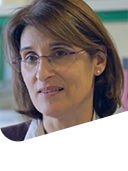
Ângela Cunha
Department of Biology & CESAM, University of Aveiro, Portugal

Mediterranean agriculture is increasingly challenged by converging environmental stressors, including drought, soil degradation, salinization, temperature extremes, and declining organic matter. Perennial systems such as olive orchards are particularly exposed, facing climate instability and stricter sustainability policies that reduce reliance on conventional agrochemicals.
Microbiome-based biological solutions offer significant potential to enhance crop resilience and sustain productivity, yet their field performance remains inconsistent, revealing a persistent gap between experimental success and orchard-scale reliability.
This limitation reflects fundamental ecological constraints. Plant genotypes filter microbial partners, while resident communities and environmental pressures shape establishment and persistence. Salinity, as a model stressor, illustrates how plant metabolic reprogramming is closely coupled with shifts in rhizosphere microbiomes. Effective interventions must therefore consider plant–microbiome dynamics, soil stress conditions, and the structural complexity of woody crops.
Future progress depends on moving beyond single-strain approaches toward integrated microbiome engineering, combining genotype-aware consortia, stress-adapted formulations, and delivery strategies tailored to perennial Mediterranean systems.
Ângela Cunha is an Associate Professor with Habilitation in Biology at the University of Aveiro (Portugal). She leads the Environmental Microbiology Laboratory (LMICRA) and is a researcher at the Center for Environmental and Marine Studies (CESAM). Her work centers on environmental microbiology and microbial ecology, especially plant–microbe interactions and how microbiomes respond to environmental stress. She focuses on developing microbiome-based solutions to support sustainable agriculture and improve crop resilience, particularly in Mediterranean ecosystems. She has been actively involved in numerous national and international research projects related to microbial diversity, biocontrol, and climate challenges. Alongside her research, she coordinates the bachelor’s degree in biology at the University of Aveiro and teaches courses in microbiology, connecting theoretical knowledge with practical, innovation-driven applications for sustainability.
Plenary 2: A multi-stage, performance-based recycled waste substrates design for Trees on Buildings for climate-resilient urban green infrastructure
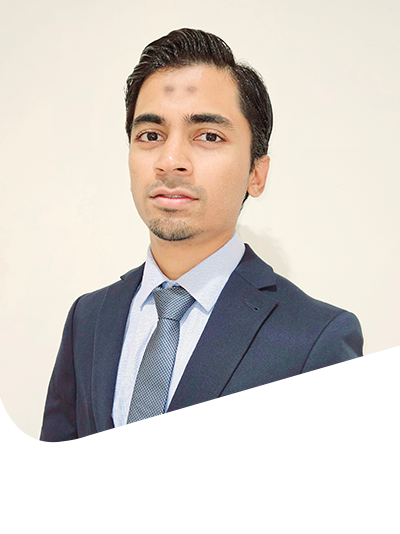
Shuraik Kader
Associate Editor – Earth Systems and Environment (Springer)
Griffith Institute for Human and Environmental Resilience (GIHER)
School of Engineering and Built Environment, Griffith University, Australia
Rapid urbanisation across the Euro-Mediterranean and Oceania regions intensifies urban heat islands, water scarcity, soil degradation, and biodiversity loss. Trees on Buildings offer a powerful nature-based solution. Yet, their widespread adoption is constrained by conventional substrates (growing media) that are too heavy, nutrient-poor, and structurally unstable for rooftop environments. This research develops bilayer-engineered recycled waste substrates (RWS) that are lightweight, nutrient-balanced, and climate-resilient, and presents a validated, multi-stage performance-based framework.
Substrates were formulated exclusively from recycled organic wastes (agricultural residues) and valorised mineral by-products from mining, construction, water treatment, and aquaculture industries. The organic-based top layer is designed to support early tree establishment through optimal nutrient cycling, moisture balance, aeration, and microbial activity. The mineral-based bottom layer provides long-term structural stability, wind resistance, and optimum drainage. Twenty-seven RWS formulations were characterised across five physicochemical and biological categories. Normalised multi-criteria ranking, validated by Monte Carlo sensitivity analysis, identified optimal top-layer and bottom-layer candidates. A 48-pot rooftop trial with two native Australian trees (Tristaniopsis laurina and Leptospermum laevigatum) is currently validating these RWS formulations under Brisbane’s subtropical climate, with monitoring of substrate quality, leachate chemistry, and vegetation.
Key findings include: (i) all RWS design meets federal safety standards with negligible heavy metals and contaminants; (ii) ammonium lignosulfonate (ALS) produces exceptional microbial diversity, a world-first discovery for rooftop substrates; (iii) optimised formulations reduce structural load by up to 20% compared to conventional media; (iv) Principal Component Analysis (PCA) identified the influential parameters on RWS design, enabling simplified industry screening; and (v) trees actively deplete nitrogen and phosphorus, confirming plant-driven nutrient cycling.
This research on RWS design offers a tangible pathway to advance SDG 6 (clean water), SDG 11 (sustainable cities), SDG 12 (responsible consumption and production), SDG 13 (climate action), and SDG 15 (life on land). By integrating substrate engineering, ecotoxicology, hydrology, and urban planning, this multidisciplinary research provides a blueprint for climate-resilient urban green infrastructure. The keynote concludes with a roadmap for cross-continental collaborations between Euro-Mediterranean regions and Australia on RWS research.
Shuraik Kader is an Associate Lecturer in Civil and Environmental Engineering at Griffith University, Australia. His research focuses on environmental engineering, built environment, soil science, green infrastructure, natural hazards, agronomy, hydrology, and climate-resilient urban design. He received two competitive seed funds at Griffith University for green infrastructure research and collaborates with Australian industries on the design of recycled waste substrates for Trees on Buildings, focusing on the Brisbane 2032 Olympics precincts. He collaborates with researchers from Euro-Mediterranean countries to investigate the region’s needs in climate resilience, soil and water conservation, bioclimatic shifts, and sustainable infrastructure. He has published over 50 journal articles and 4 book chapters. He serves as an Associate Editor for Earth Systems and Environment, and as Editor for an upcoming Elsevier volume on sustainable soil management. He has also guest-edited one special issue on Advances in Landslide Disasters. In addition to his research, Shuraik teaches courses on hydrology, fluid mechanics, groundwater and soil contamination, research methods, and civil engineering design projects at Griffith University. Shuraik has also guest-lectured at Northumbria University (UK) and the University of Sfax (Tunisia).
Plenary 3: Pervasive Environmental Monitoring: Energy-Aware Distributed Sensor Systems for a Sustainable Euro-Mediterranean

Olfa Kanoun
Faculty of Electrical Engineering and Information Technology
Chemnitz University of Technology, Chemnitz, Germany
Effective management of the Euro-Mediterranean environment, its degrading soils, stressed water bodies, polluted coastal zones, and climate-vulnerable arid territories, depends on continuous, dense, and geographically extensive data that current sensor infrastructures cannot deliver. The region's most critical environmental challenges remain systematically underobserved, not because measurement science lacks the answers, but because conventional sensor deployments are too costly, too power-hungry, and too inflexible for the remote, resource-scarce environments where data is most urgently needed.
Energy-aware distributed sensor systems offer a fundamental response to this infrastructure gap. By combining wireless energy-autonomous sensor networks with electrochemical sensors for nitrate, nitrite, pesticide, and heavy metal detection, impedance-based soil characterization, nanocomposite flexible sensing layers, and multi-source energy harvesting from solar, vibrational, and thermal ambient sources, it becomes possible to deploy dense, self-powered, maintenance-free sensor nodes across the full range of Euro-Mediterranean environments from irrigated agricultural fields and arid inland zones to coastal waters and flood-prone river systems. Both wired and wireless architectures are essential to this vision: wired networks provide the reliability demanded by critical long-term monitoring, while wireless nodes deliver the spatial density and reach that no cable infrastructure can match.
Results from ongoing research demonstrate the feasibility of this approach across key environmental domains, including real-time soil moisture and organic matter characterization, on-site detection of nitrate and nitrite in agricultural water, multi-contaminant identification via machine-learning-enhanced electronic tongue systems, and autonomous flood surveillance through energy-harvesting wireless nodes. These capabilities collectively address the water, soil, pollution, and natural hazard dimensions, and point toward a future in which sustainable sensor infrastructures designed to harvest their own energy and minimize their own environmental footprint become the data foundation for Euro-Mediterranean environmental science, policy, and the achievement of the UN Sustainable Development Goals.
Olfa Kanoun is a Full Professor for Measurement and Sensor Technology at Chemnitz University of Technology, Germany, where she leads the Laboratory for Measurement and Sensor Technology (MST). Her research focuses on energy-autonomous wireless sensor systems, impedance spectroscopy, electrochemical sensors for environmental and biomedical applications, and flexible nanocomposite sensors. She is a Senior Member of IEEE, a Distinguished Lecturer of the IEEE Instrumentation and Measurement Society, and the recipient of the 2022 IEEE IMS Technical Award for pioneering the evolution of impedance spectroscopy from laboratory scale to field sensors. In 2025, she received the President of the Republic of Tunisia's Award for the Best Tunisian Researcher Living Abroad. Ranked among the world's top 2% most-cited scientists, she has published over 850 peer-reviewed publications and 14 books.
Plenary 4: Solar steam generation assisted photocatalytic systems for energy and environmental applications
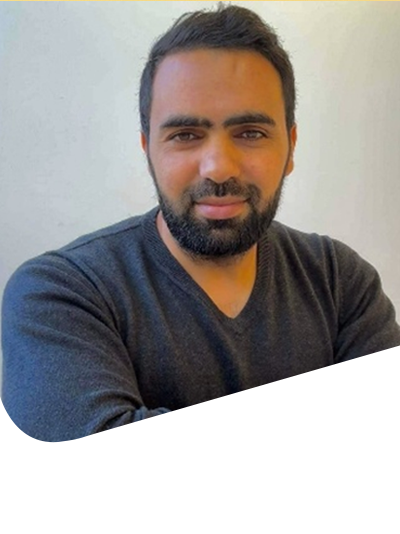
Ridha Djellabi
Departament of Chemistry, Alfaisal University, Riyadh, Saudi Arabia
The coupling of solar-driven photothermal steam generation with conventional photocatalysis represents a novel and highly promising strategy, offering synergistic benefits across a wide range of applications such as seawater desalination, water treatment, and sustainable hydrogen production. This integrated approach enhances solar energy utilization by merging interfacial steam generation with photocatalytic redox reactions. This talk aims to discuss our recent progress in the development and optimization of hybrid photothermal-photocatalytic systems. Various system architectures were engineered using advanced nanostructured photothermal and photocatalytic materials to improve solar absorption, thermal management, charge carrier separation, and overall efficiency under irradiation. These systems were successfully applied for hydrogen production, seawater desalination and water detoxification. This integrated platform provides enhanced performance, introduces new mechanistic insights, and is well aligned with circular economy principles and zero-waste strategies.
Ridha Djellabi is a chemist specializing in sustainable technologies for environmental remediation and energy production. Since 2022, he has been recognized among the World’s Top 2% Scientists by Stanford University (USA) and Elsevier. He earned his PhD in Analytical and Environmental Chemistry from Badji Mokhtar University (Algeria), with part of his doctoral research conducted at the University of Milan (Italy). Following his PhD, he completed postdoctoral research at the Laboratory of Separation and Reaction Engineering in Porto (Portugal). Dr. Djellabi subsequently held research positions at the Research Center for Eco-Environmental Sciences (China) and Shenzhen University (China). In 2020, he returned to the University of Milan (Italy) as a researcher for two years. He then served as a Personal Docent and researcher at Universitat Rovira i Virgili in Tarragona (Spain). He is currently an Assistant Professor of Chemistry at Alfaisal University (Kingdom of Saudi Arabia). His research focuses on the development of solar-driven materials for steam generation and photocatalytic processes, with applications in environmental remediation, energy conversion, and the valorization of food and biomass waste into high-value products. Dr. Djellabi has co-authored more than 125 scientific publications, holds a patent, and has contributed to several book chapters. He has also organized multiple special issues in scientific journals and currently serves as an Associate Editor of the Euro-Mediterranean Journal for Environmental Integration.